A
Jew called Saul? An apostle called Paul? Or just plain
invention? From
religious policeman to grandee
of the church,
from beast fighter in Ephesus to beheading in Rome,
Paul's story has more holes than a swiss cheese.
Curiously, the
trail-blazing Christian missionary and apostle appears nowhere in the secular histories of his
age. Ironically, though supposedly in Jerusalem at
the right time, he can give no witness to a historical
Jesus. But was
Paul himself a
genuine historical figure? The
Pauline journeys, including the supposed transportation
of the apostle to Rome, are characterized by incongruities, contradiction,
and the absurd.
A closer look at the great missionary that some
say "founded
Christianity".
|
|
Journeys
with an Apostle
|
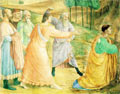
Witness
to murder. Christian saint gets off to a cracking start. |
 Two Different Pauls in Epistles and Acts, plus an Extra, Saul Two Different Pauls in Epistles and Acts, plus an Extra, Saul
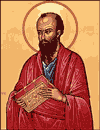
The popular image of St Paul is
selectively crafted from two sources: the Acts of the Apostles and
the Epistles which bear his name. Yet the two
sources actually present two radically different individuals
and two wildly divergent stories. Each relies on the other
for coherence yet simultaneously requires an arbitrary
selection of "fact" from the wealth of patent nonsense.
Can
the historicity of the apostle realistically be maintained?
|
| |
|
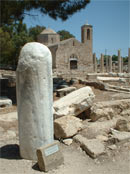
Paul was
here? |
Journeys with an Apostle – First Mission
Paul in Cyprus and Galatia – Real or Imagined?
Viewed without the rose-tinted spectacles
of Christian faith, the first voyage of Paul is as fanciful
as the first voyage of Sinbad. Improbable, unlikely
incidents are juxtaposed with the miraculous and
the ridiculous. Faith can offer special
pleas for every incongruity but logical thinking cannot.
|
| |
|
Dying to meet you? |
Galatians – Barbarians, Settlers or Jews?
Galatians, the "most authentic" of the Pauline epistles, raises more questions than it answers. If its pugnacious author was, in reality, an early Christian missionary, then the letter is perhaps the first record of his clash with competitors over a territory he had claimed for himself.
But what territory? Something about Paul's dealings with the Galatians in not quite kosher.
|
| |
|
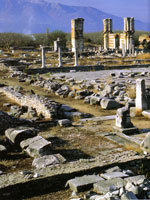
Landfall at Philippi? For Brutus, anyway. |
Journeys with an Apostle – Second Mission
Philippi – First Church in Europe or an origins myth?
St Paul's supposed journeys have more symbolism than realism. Taking a closer look at the military colony where the apostle is said to have converted a seller of purple and his gaoler and founded the first church in Europe. Paul's presence in Philippi is decidedly dubious.
"See
you at Philippi."
|
| |
|
 |
"Paul in Athens" Really?
Did the wandering apostle of the new revelation really make a flying visit to the home of Greek rationalism and tell the philosophers where they were going wrong? Or is Paul's Athenian interlude just another fabrication?
|
| |
|
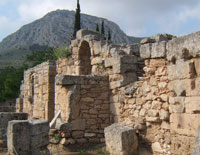 |
Corinth – Rome's imperial command post in Greece. But was it Paul's?
In the New Testament yarn Paul visited Corinth on his second missionary journey, stayed eighteen months and founded the Corinthian church. Two letters ostensibly written to the Christians of Corinth form the core of "authentic" Pauline epistles. But was it friction or fiction in Roman Greece?
|
| |
|
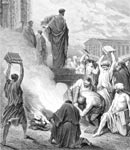
Visit Athens,
burn a few books .. the Lord's work. |
A
Greek Odyssey? – Second and Third Missions
Acts records the apostle's
presence at major cities like Athens, Thessalonika and Ephesus
and minor towns like Derbe and Mitylene, yet Paul's
epistles confirm very little of this grand tour. Whilst
a missionary journey, in the manner of a wandering sage or peripatetic
philosopher, is intrinsically plausible, the Pauline
journeys, characterized by incongruities, contradiction, and
the absurd, are not.
|
| |
|
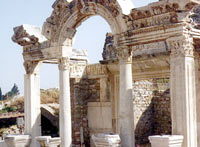
Magic hankies for Jesus? |
Journeys with an Apostle – Third Mission
Paul at Ephesus – Derring-do or hocus pocus?
The reports of Paul's "evangelisation" of vast areas of the eastern Roman Empire are a triumph of brevity. This is especially true of Paul's third missionary journey, spent mainly in Ephesus. But did a Jewish evangelist called Paul really turn this sophisticated city upside down?
|
| |
|
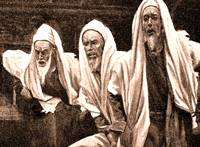
"There he is, GET HIM!" |
Paul in Jerusalem - An Unbelievable Yarn
Paul escapes murderous Jews in Jerusalem – three times?
Plus the curious 'Stephen and Paul' speech.
|
| |
|
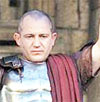
Hardman shaken by Paul? |
Paul in Caesarea? Trial and Error
Paul before Felix and Festus? Only in the Christian dreamscape are its fabricated heroes always the centre of attention.
|
| |
|
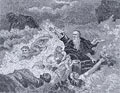
Lost at
sea? |
Last Journey with an Apostle
The
Road to Rome? – Theology meets Josephus!
The
Church "tradition" of Paul's voyage to
Rome, followed by a martyr's death, cannot survive
rational scrutiny. The fable may well owe its origin
to the works of Josephus, the cornucopia of the
Christian fraudsters.
|
| |
|
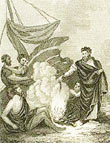
Venom in Malta? |
All at Sea – The Curious Yarn of Paul's "Shipwreck"
At least three countries lay claim to the site of Paul's shipwreck, all backed up by local "traditions," venerable artefacts and the insistence of local clergy and entrepreneurs. But the tale of maritime adventure is a pious fantasy and all three claims are bogus.
|
| |
|
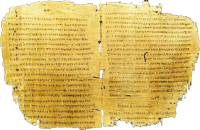
Dear
diary ... |
Epistles – Bold, Catholic and Fake
Pauline and other apostolic letters certainly exist but the epistles,
far from being genuine letters, originated in the
acrimonious doctrinal battles of the 2nd century – a
time when "pseudepigraphy" and forged
apostolic writings were weapons in the war of "Christianities".
|
| |
|

"As I was saying ..." |
Epistles – The bogus "authentic" Pauline letters!
"Pseudepigraphy"
is the very heart of the New
Testament. The
Pauline corpus is not an exception – it is a compendium of fraud. Many scholars attempt "chronologies" of
the life of Paul, yet Acts of the Apostles is
a naive fantasy and the Pauline letters of themselves
provide few clues in time or place.
|
| |
|
"Now someone take notes ..." |
Paul – A Diluted Gnosticism at the heart of Orthodoxy
Did Paul really invent Christianity? Purportedly, Paul, tireless founder of churches and evangelist extraordinaire, is also the first – and most influential – theologian of the Church. Whoever wrote in the name of Paul combined elements from Judaism, Gnosticism, and the Mystery religions to produce the winning formula.
|
| |
|
"None of that ..." |
Paul – The first theologian?
Priestly Imperatives
The historicity of the super-apostle, vexed by troubles on all sides, warily asserting (re-asserting?) authority over "his" churches by stern letters, is not compelling. The "authentic voice" within the epistles is that of an authoritarian churchman. His call to "follow traditions" and "obey written rules" is clearly anachronistic and moves the epistles into a later age than purported for a 1st century apostle.
|
| |
|
To boldly go ... |
Ripping Yarn – Paul and the "Acts of the Apostles"
Christianity was NOT propagated by the "bold evangelism" of a handful of fearless apostles, filled with the Holy Spirit and energized by their personal experiences of a resurrected godman. In fact, no evidence links Paul to the major Christian churches – the story in the Acts of the Apostles is a pious invention.
|
| |
|
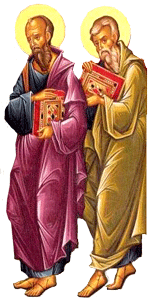
Tweedle dum and Twindle dee |
Witness creation programme – "Ignatius and Polycarp"
Phantom saints were created by 2nd century Catholic Orthodoxy, seeding its own beliefs into an earlier era as "evidence" for Paul and as a rebuttal to Gnosticism. A phantom saint heads the list of "witnesses to witnesses".
|
| |
|
 |
Paul in Rome? No kidding!
In Acts of the Apostles the career of Paul peters out when the great man finally reaches Rome. Of his trial before Caesar and martyr's execution not a word. But the resourceful mind of religious fraudsters responded with aplomb, creating a Pauline Rome to delight the faithful and instil faith in the doubtful. |
| |
|

Too good to be true |
The Improbable Paul – The making of a Super Apostle
Paul's letters are not what they appear to be – and more to the point, not when they appear to be. NOT ONE of the early Christian churches in the major cities of the Roman world owed anything to a pioneering apostle called Paul. Almost everything we think we know about Paul comes not from his own writings but from Acts of the Apostles, the great work of Catholic harmonization. As the Catholics successfully assimilated their Marcionite and Gnostic opponents, the legendary Paul was reworked in Acts. What we have in Paul is not a super-apostle but a superlative fraud.
|